Designing with Purpose: How Sustainability Is Redefining Modern Building Materials
The world of construction is evolving fast. Beyond durability, functionality, and aesthetics, today’s architects, designers, and developers face a new imperative: sustainability. This shift isn’t just a buzzword; it’s a defining force shaping how we choose, specify, and trust building materials.
At Al Amana Building Materials, sustainability is at the heart of our approach to material selection and specification. Across Oman and the wider GCC, the demand for eco-conscious construction solutions is rising, prompted by global environmental standards, performance expectations, and a growing awareness that buildings must contribute to a healthier future.
Here’s how sustainability is redefining modern building materials and why it matters.
Sustainability as a Core Design Principle
Modern sustainable design goes beyond energy efficiency; it considers the entire lifecycle of a material: from production and transportation to installation, use, and eventual reuse or recycling.
Today’s building materials are evaluated not just for how they look or perform, but for:
- Energy footprint during manufacturing
- Use of recycled or responsibly sourced components
- Longevity and durability
- Low maintenance requirements
- Impact on indoor air quality
For developers and architects, this means choosing products that meet strict performance standards and align with environmental goals.
Performance and Responsibility – The New Benchmark
Traditionally, sustainability was seen as supplementary to performance. That’s no longer the case. High-performance materials today are expected to deliver both functional excellence and environmental accountability.
For example:
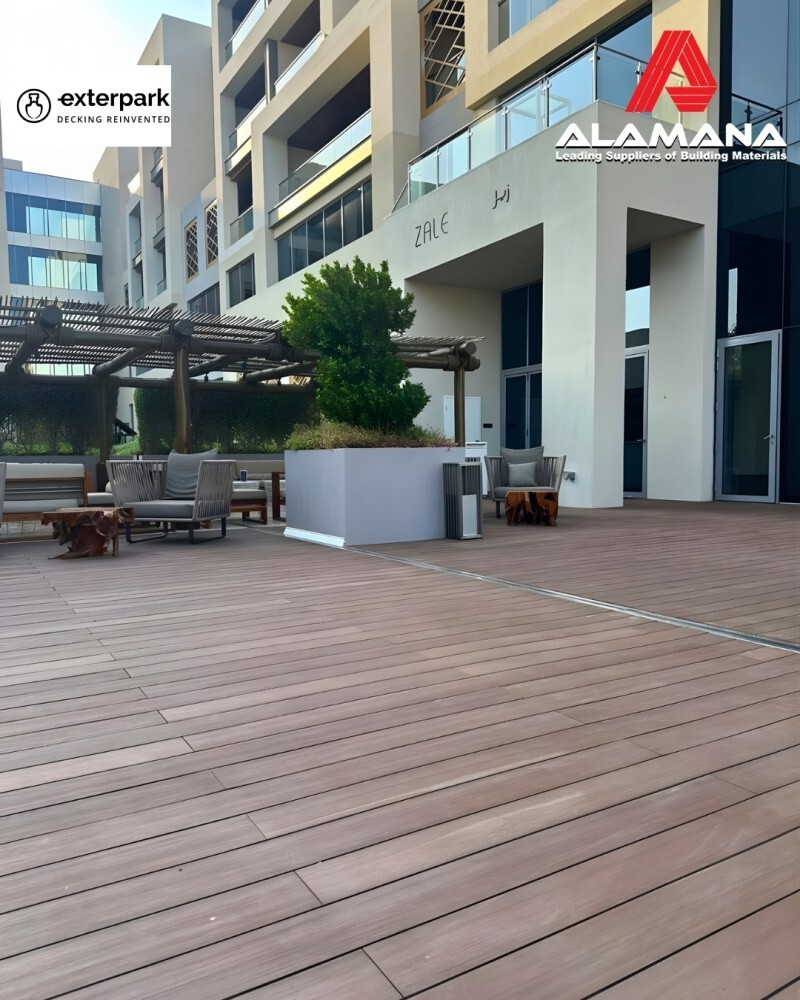
- Wood-Plastic Composite (WPC) decking, such as our Exterpark® systems, combines durability with eco-conscious manufacturing, reducing reliance on virgin timber while maintaining long service life.
- Porcelain tiles and outdoor ceramics with high density, low porosity, and long lifecycle performance not only reduce maintenance costs but also minimise resource consumption over time.
- Construction chemicals with lower Volatile Organic Compounds (VOCs) improve indoor air quality and contribute to healthier building standards.
These innovations demonstrate that sustainability and performance are not trade-offs; they are complementary priorities.
Material Transparency and Certifications
The sustainability landscape now includes a wider spectrum of verifiable standards and certifications. Architects and sustainability consultants are increasingly asking for:
- Environmental Product Declarations (EPDs)
- Life Cycle Assessments (LCAs)
- Green building certification compliance (LEED, BREEAM, etc.)
- Responsible sourcing documentation
These frameworks help compare materials objectively, support regulatory requirements, and demonstrate measurable environmental impact.
Economic Value of Sustainable Materials
Sustainable materials are no longer seen as “premium extras.” In many cases, they deliver real cost benefits:
- Lower operational costs due to long lifecycle performance
- Reduced maintenance and resurfacing needs
- Enhanced property value and market appeal
- Improved brand positioning for hospitality and commercial spaces
Forward-looking builders and developers increasingly recognise that materials with solid sustainability profiles often outperform conventional alternatives over time.
Regional Relevance: Sustainability in Oman & the GCC
Across the GCC, sustainability is gaining traction in both public and private sectors. In Oman, this trend aligns with broader national goals for responsible development and climate resilience.
Sustainable choices in building materials deliver practical advantages in regional climates where:
- Heat and UV exposure challenge material durability
- Water scarcity demands efficient use of resources
- Coastal environments require moisture and salt resistance
- Long lifecycle quality supports economic sustainability
As material innovation accelerates, sustainable solutions are proving their worth both environmentally and commercially.
What This Means for Designers & Developers
Sustainability is no longer optional, it is foundational to modern construction:
- Materials must be resilient and long-lasting
- Environmental impact must be measurable
- Performance and eco-credentials must go hand in hand
- Design decisions must anticipate future regulations and standards
Whether it’s flooring, sanitaryware, decking, or architectural finishes, choosing purpose-built sustainable products adds value beyond aesthetics.
Al Amana’s Commitment to Sustainable Solutions
At Al Amana Building Materials, sustainability is woven into our product portfolio and advisory approach. We partner with leading international brands whose materials are engineered to meet global performance and environmental standards.
From climate-ready decking systems to high-performance tiles and responsible architectural finishes, we help our clients make choices that are informed, durable, and future-oriented.
In the evolving landscape of modern construction, materials chosen with purpose don’t just build structures, they shape sustainable legacies.
We craft seamless experiences that transform your spaces with high-quality materials and skilled expertise.
Company
Get in touch
- Head Office
- +968 24815080
- Al Amana - Home Design Centre
- +99424574, +99364259
- Landline
- +22700146