Water efficiency has become an important part of modern bathroom planning.
Homeowners, developers, architects, interior designers, consultants, and hotel operators are now looking for bathrooms that reduce unnecessary water use without making the space feel basic or uncomfortable.
This is especially relevant in Oman, where responsible water use, long-term operating costs, and sustainable building practices are becoming more important across residential, hospitality, and commercial projects.
The good news is that a water-efficient bathroom does not need to sacrifice comfort, design, or performance.
With better planning and the right products, a bathroom can offer a satisfying shower, smooth water flow, reliable flushing, premium aesthetics, and lower water consumption at the same time.
Brands such as Hansgrohe and Geberit offer technologies that help reduce water usage while maintaining a comfortable user experience. Hansgrohe’s EcoSmart technology controls the flow in selected mixers and showers, while Geberit concealed cisterns and dual-flush systems support efficient WC flushing.
Why Water-Efficient Bathroom Design Matters
Bathrooms account for a significant part of daily household water use.
Water is used through:
- Basin mixers
- Showers
- Bathtubs
- WCs
- Bidet sprays
- Cleaning
- General bathroom maintenance
When products are selected only for appearance, without considering their flow rates or flushing systems, water consumption can remain unnecessarily high.
A water-efficient bathroom helps:
- Reduce water usage
- Lower hot-water energy demand
- Control monthly utility costs
- Support sustainable building goals
- Improve long-term project efficiency
- Reduce unnecessary water wastage
- Add value to modern properties
For villas, apartments, hotels, hospitals, offices, and commercial developments, these benefits multiply across every bathroom installed.
Water Efficiency Should Begin at the Planning Stage
Water-saving products should not be treated as last-minute additions.
Bathroom efficiency begins with the layout, plumbing design, product selection, water pressure, installation details, and expected user needs.
Before selecting products, project teams should consider:
- How many people will use the bathroom?
- Is it for a private home, hotel, office, or public building?
- What is the available water pressure?
- How frequently will the shower and WC be used?
- Is the priority daily family comfort or high-volume commercial use?
- Are concealed systems being planned?
- Will maintenance access be available?
- Can water-saving fittings be installed without changing the design concept?
Early planning helps ensure that the bathroom functions efficiently without creating weak water flow, flushing problems, or installation complications.
Choose Water-Saving Basin Mixers
Basin mixers are used several times throughout the day.
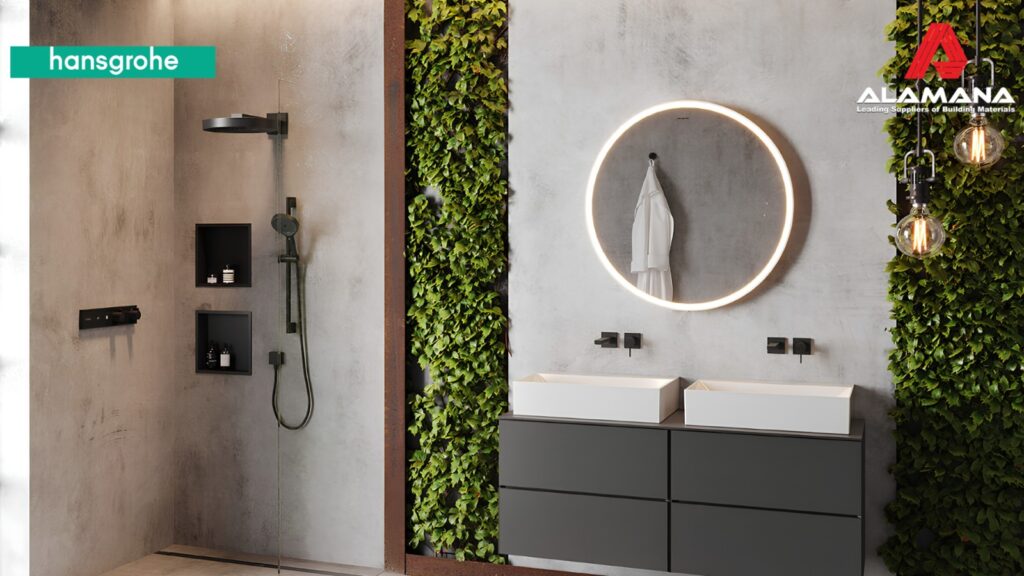
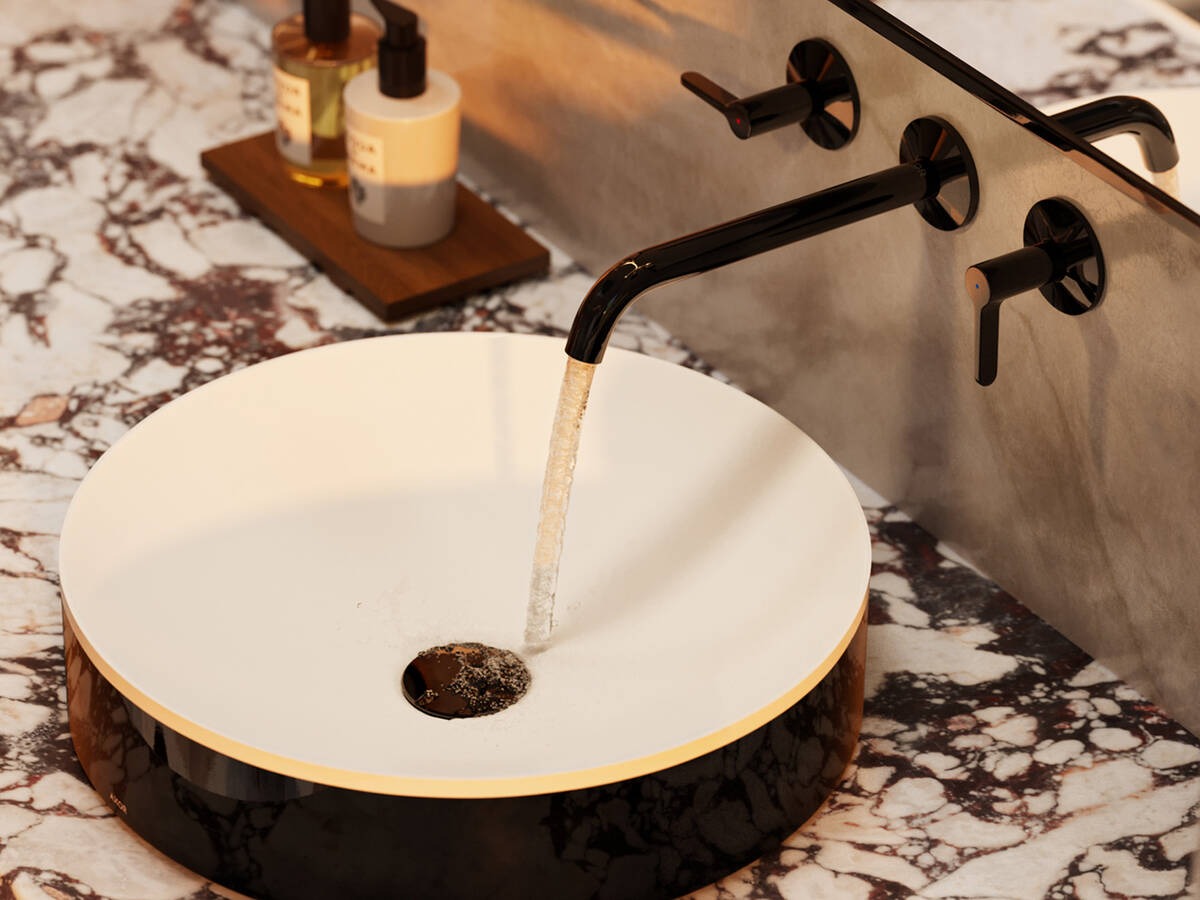
Small reductions in their flow rate can create meaningful water savings over time, especially in villas, apartments, hotels, offices, schools, and commercial washrooms.
Hansgrohe EcoSmart basin mixers use integrated flow-control technology to reduce water consumption while maintaining a full and comfortable spray. Selected EcoSmart mixers use around 5 litres per minute, while EcoSmart+ models can use approximately 4 litres per minute at 3 bar.
This is achieved through flow limitation and water-air mixing, which helps the stream feel comfortable even with a reduced water volume.
When choosing a water-saving mixer, look at:
- Flow rate
- Basin size
- Mixer height
- Water pressure
- Spout reach
- Ease of operation
- Maintenance requirements
- Compatibility with the overall bathroom design
The right mixer should save water while remaining comfortable for washing hands, brushing teeth, and daily grooming.
Save Water Without Reducing Shower Comfort
The shower is one of the most important parts of the bathroom experience.
Many people assume that using less water means accepting weak pressure or an unsatisfying spray. Modern water-saving shower technology is designed to avoid this problem.
Hansgrohe EcoSmart shower products use flow regulation and specially designed spray technology to reduce water consumption. Many EcoSmart showers use around 8 litres per minute, while selected EcoSmart+ models can use approximately 6 litres per minute or less at 3 bar. Depending on the product, this can reduce water usage considerably compared with standard Hansgrohe showers.
The spray experience is maintained by controlling the water flow and, in selected products, mixing air into the droplets or using carefully designed spray nozzles.
For comfortable and efficient showering, consider:
- Shower flow rate
- Overhead or hand-shower size
- Spray patterns
- Water pressure
- Thermostatic control
- Ease of cleaning
- Shower duration
- Number of users
- Hot-water capacity
A properly selected shower can feel premium while using less water and less energy for heating.
Use Thermostatic Controls for Better Efficiency
A large amount of water can be wasted while users adjust the temperature manually.
Thermostatic shower controls help reach and maintain the selected temperature more quickly. This improves comfort and can reduce the water wasted during repeated temperature adjustment.
They are especially useful in:
- Family bathrooms
- Hotels
- Villas
- Apartments
- Guest bathrooms
- Wellness and hospitality spaces
A stable temperature also improves safety and creates a more consistent shower experience.
For projects with many bathrooms, such as hotels or residential developments, even small improvements in daily water use can create meaningful operational benefits.
Select Efficient WCs and Flushing Systems
The WC is another major area of bathroom water consumption.
An effective water-saving WC system should use the minimum required volume while still cleaning the ceramic properly. Poor flushing performance can lead to repeated flushing, which removes any expected water-saving benefit.
Geberit’s concealed cistern systems and flush valves are designed to coordinate with the WC ceramic for efficient flushing. Geberit states that selected systems can support a full flush from 4 litres and a partial flush from 2.6 litres, depending on the installation and ceramic used.
Dual-flush systems allow the user to choose between a smaller and larger flush volume based on the requirement.
When selecting a WC system, consider:
- Full and partial flush volumes
- Compatibility between cistern and WC ceramic
- Quality of the flush valve
- Water pressure
- Bowl design
- Ease of cleaning
- Maintenance access
- Spare-part availability
- Installation quality
Efficient flushing is about the complete system, not only the button or cistern.
Why Concealed Cisterns Work Well in Modern Bathrooms
Concealed cisterns place the flushing system behind the wall, leaving only the WC and flush plate visible.
This creates a cleaner and more modern bathroom appearance. It can also support better space planning, particularly with wall-hung WCs.
Geberit concealed cisterns are designed as integrated behind-the-wall systems and can be combined with dual-flush actuator plates and compatible WC ceramics.
Benefits of concealed systems include:
- Cleaner visual appearance
- Easier floor cleaning with wall-hung WCs
- Better space utilisation
- Flexible flush-plate design
- Controlled flush volumes
- Compatibility with modern bathroom layouts
However, they must be planned early because the wall structure, drainage, water connection, installation frame, and maintenance access all need to be considered.
Match the Products to the Available Water Pressure
A product may be water-efficient, but it must still suit the site conditions.
Flow rates are usually tested at a stated pressure. Actual performance can vary depending on the building’s water pressure, pipe sizing, pump system, installation height, and simultaneous water demand.
Before final selection, the project team should confirm:
- Available static and dynamic pressure
- Required minimum operating pressure
- Pipe sizes
- Pump capacity
- Number of fixtures running together
- Hot-water system capacity
- Pressure differences between floors
This is especially important in villas, hotels, apartment buildings, and multi-storey commercial projects.
Correct technical planning prevents weak flow and protects the intended comfort level.
Reduce Hot-Water and Energy Consumption
Saving water also helps reduce energy use.
When a shower or mixer uses less hot water, less energy is required to heat it. Hansgrohe notes that reducing hot-water consumption through EcoSmart products can lower energy demand in addition to reducing water use.
This is particularly valuable in:
- Hotels
- Resorts
- Residential towers
- Villas with multiple bathrooms
- Staff accommodation
- Gyms and wellness facilities
- Hospitals
Water efficiency and energy efficiency are closely connected in bathroom design.
Avoid Oversizing Showers and Bathtubs
Luxury does not always mean selecting the largest available fixture.
Very large overhead showers, multiple outlets, body jets, and oversized bathtubs can substantially increase water and hot-water demand.
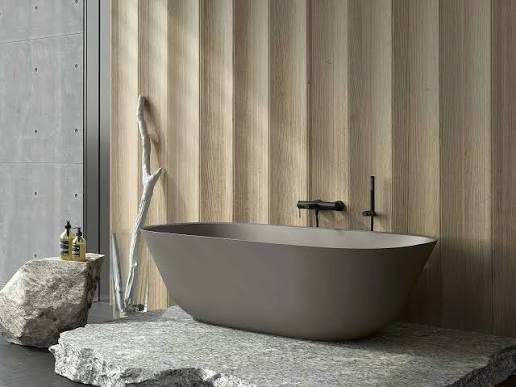
A better approach is to select products based on how the bathroom will actually be used.
Ask:
- Will all shower outlets be used regularly?
- Can the user operate outlets separately?
- Does the hot-water system support the selected combination?
- Is the bathtub likely to be used frequently?
- Would a well-designed single shower provide better everyday comfort?
- Can the same luxury feeling be created through lighting, finishes, materials, and layout?
Thoughtful specification often creates a more comfortable and efficient bathroom than simply adding more water outlets.
Use Zoning to Improve Bathroom Efficiency
A well-planned bathroom separates the wet and dry zones.
This improves:
- Drainage
- Cleaning
- Safety
- Waterproofing
- Ventilation
- User comfort
- Product durability
The shower should be positioned where drainage and waterproofing can be managed properly. The basin should allow convenient daily use without unnecessary splashing. The WC should have sufficient space and easy access to the flush plate.
Good zoning reduces maintenance issues and helps the bathroom function more efficiently.
Maintenance Is Part of Water Efficiency
Even the best water-saving products will not perform efficiently if they are poorly maintained.
Leaks, worn seals, blocked aerators, damaged flush valves, and incorrect settings can increase water consumption.
Regular checks should include:
- Dripping mixers
- Running cisterns
- Blocked shower nozzles
- Damaged cartridges
- Incorrect flush-volume settings
- Loose connections
- Water-pressure changes
- Scale build-up
Geberit highlights long-term spare-part availability for many concealed cistern components, which supports maintenance and extends product life.
Easy access to spare parts and technical support should therefore be considered during product selection.
Water Efficiency in Villas
Villas often have several bathrooms, guest washrooms, outdoor showers, pool bathrooms, and large master suites.
This creates significant water-saving potential.
For villa bathrooms, consider:
- EcoSmart basin mixers
- Water-efficient hand and overhead showers
- Dual-flush concealed cisterns
- Thermostatic shower controls
- Practical bathtub selection
- Leak detection
- Separate control of multiple shower outlets
- Good hot-water system planning
Water-saving products can reduce overall demand without taking away from the luxury of the space.
Water Efficiency in Apartments
Apartment bathrooms usually need to balance compact design, comfort, maintenance, and cost.
Wall-hung WCs with concealed cisterns can help create a cleaner and more spacious appearance. Compact basin mixers and efficient showers can reduce consumption while supporting everyday comfort.
For residential developments, using efficient products consistently across many units can create a significant overall reduction in water and energy use.
Water Efficiency in Hotels and Commercial Projects
Hotels and commercial properties contain many bathrooms and washrooms, so small savings per fixture can produce a much larger total benefit.
Hansgrohe specifically notes that water and energy savings can multiply in projects with many bathrooms, including hotels and public facilities.
Hotels should consider:
- Efficient guest-room showers
- Water-saving basin mixers
- Dual-flush WC systems
- Reliable concealed cisterns
- Durable products for frequent use
- Easy cleaning
- Accessible technical support
- Consistent guest comfort
The aim should be to reduce operating costs without making the guest experience feel restricted.
Common Mistakes to Avoid
Choosing Products Only by Appearance
A beautiful product may not suit the available water pressure or usage requirements.
Ignoring Flow Rates
The flow rate should always be checked before selecting mixers and showers.
Using Incompatible WC Components
The cistern, flush valve, and ceramic should work together as a system.
Selecting Concealed Systems Too Late
Behind-the-wall systems must be coordinated with the civil, plumbing, and interior work.
Assuming Low Flow Means Low Comfort
Modern products are designed to improve the spray experience while limiting water consumption.
Ignoring Maintenance Access
Valves, cisterns, cartridges, and concealed components must remain serviceable.
Overspecifying Shower Outlets
Too many outlets can increase water and energy demand without improving everyday use.
Hansgrohe and Geberit Through Al Amana
Al Amana Building Materials supports bathroom planning in Oman through access to established international sanitary brands.
Al Amana states that it has represented Hansgrohe in Oman for more than four decades and also offers Geberit sanitary technology and bathroom solutions.
Hansgrohe offers water-saving mixers and showers using technologies such as EcoSmart and EcoSmart+, while Geberit provides concealed cisterns, dual-flush systems, installation frames, actuator plates, and compatible sanitary technology.
Through its showroom and technical support, Al Amana helps homeowners, developers, architects, consultants, interior designers, contractors, and hospitality teams compare products and select solutions suitable for their design and project requirements.
A Practical Water-Efficient Bathroom Checklist
Before finalising the bathroom, confirm the following:
- Water-saving basin mixer selected
- Shower flow rate checked
- Water pressure verified
- Thermostatic control considered
- Efficient WC and dual-flush system selected
- Cistern and WC ceramic confirmed as compatible
- Concealed system planned before wall completion
- Maintenance access provided
- Hot-water capacity checked
- Wet and dry zones planned
- Waterproofing and drainage coordinated
- Spare parts and technical support available
- Product selection matched to user comfort
This simple checklist helps combine water efficiency, functionality, and design.
Final Thoughts
A water-efficient bathroom should not feel like a compromise.
With the right planning, it can provide a satisfying shower, smooth mixer performance, reliable flushing, premium design, and comfortable everyday use while consuming fewer resources.
Water-saving mixers and showers from Hansgrohe, together with Geberit concealed cisterns and dual-flush systems, can support sustainable bathroom planning for homes, villas, apartments, hotels, and commercial projects in Oman.
The key is to look at the bathroom as one complete system.
Water pressure, flow rates, plumbing, hot-water demand, product compatibility, installation, maintenance, and user comfort must all work together.
When these details are considered early, the result is a bathroom that looks premium, performs reliably, and uses water more responsibly.
For modern projects in Oman, that balance between comfort and efficiency is no longer an optional feature.
It is part of good bathroom design.
We craft seamless experiences that transform your spaces with high-quality materials and skilled expertise.
Company
Get in touch
- Head Office
- +968 24815080
- Al Amana Home - Showroom
- +968 91106036, +968 99357490
- Landline
- +968 22700146